Skeleton Review: Retro Vibes for Embroidery
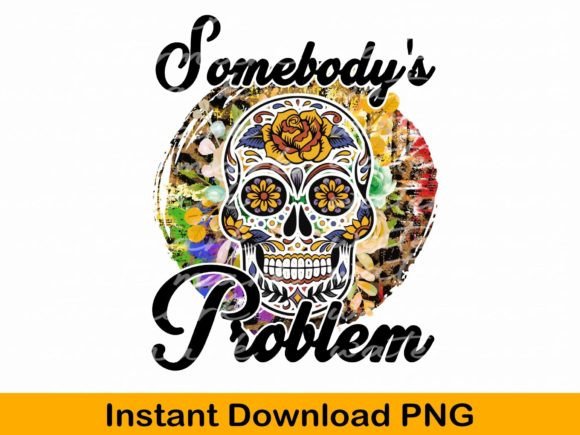
As a designer who spends more time than I care to admit staring at stitch density charts and testing thread tension, I approach every new digital asset with a mix of curiosity and skepticism. The market is flooded with generic clip art, but finding a design that balances aesthetic appeal with technical feasibility for embroidery is a different story entirely. Today, I am evaluating the Somebody s Problem Skeleton Png, Retro, a graphic that markets itself through sublimation keywords like "Western PNG Sublimations" and "Skeleton Sublimation Download." While the listing emphasizes its utility as a printable PNG for home printing, my job is to determine if this image translates effectively into a physical, stitched reality for crafters, Etsy sellers, and small business owners.
First Impressions and Visual Personality
The moment you load the file, the retro aesthetic hits you immediately. This isn’t a scary Halloween prop; it’s a stylized, nostalgic take on the skeleton motif. The mood is playful yet slightly edgy, fitting perfectly into the current trend of vintage-inspired streetwear and boutique apparel. The layout appears balanced, which is crucial for embroidery because an asymmetrical design can look lopsided once the fabric distorts under the hoop.
For designers, the visual personality of Somebody s Problem Skeleton Png, Retro suggests a specific target audience: people who appreciate irony, humor, and classic Americana. It feels right at home on a canvas tote bag or a heavyweight sweatshirt. However, before we talk about stitching, we have to acknowledge that this is originally a raster image intended for sublimation. This means the edges are likely pixel-based rather than vector paths, which presents a unique challenge when converting it for machine embroidery software. You will need to trace or convert the shapes carefully to ensure clean lines in the final product.
Real-World Application: From Screen to Stitch
Let’s imagine a real scenario. You are preparing a batch of custom merchandise for a holiday gift shop or a local craft fair. You decide to use this skeleton design on a cream-colored apron for a baker who has a sense of humor. Or perhaps you are creating personalized baby onesies where the skeleton is dressed in pastel colors, turning a potentially spooky image into something whimsical.
In these contexts, the design performs well because it relies on bold shapes rather than intricate, microscopic details. When converted into an embroidery file, the skeleton’s form allows for creative use of fill stitch for the body and satin stitch for outlines. The retro style naturally lends itself to chunky, confident stitches, which helps hide minor imperfections in the stitching process—a common issue when working with less experienced operators or varying fabric types.
This design also shines in the realm of custom apparel. Think about embroidered patches for denim jackets or caps. The skeleton theme works exceptionally well for embroidered patch applications because the high contrast between the white bone structure and dark background (or vice versa) creates a striking visual impact even from a distance. For an Etsy seller, this versatility increases your product range. You aren't limited to just t-shirts; you can expand into tote bag design variations, pillow covers, and even kitchen towels.
Technical Considerations for Embroidery Designers
While the artistic merit is clear, the technical execution requires careful planning. Because the source is described as a PNG download, you must address how the design handles different stitch types. Here is what you need to watch out for:
- Stitch Density: Ensure the stitch density is appropriate for the fabric. If the design is too dense, it will pucker on lightweight cottons. If it is too sparse, it won’t cover the base fabric adequately, especially on darker materials.
- Thread Colors: The retro vibe often calls for muted tones—mustard yellows, dusty blues, or burnt oranges. Testing thread colors against the fabric is non-negotiable. A black skeleton on a black shirt will disappear without a contrasting stabilizer or backing.
- Hoop Size: Confirm the hoop size matches your garment. A large skeleton might require a 6x10 hoop, limiting where you can place it on a baby bodyside or a small cap brim.
Where to Use It Carefully
No design is universal, and Somebody s Problem Skeleton Png, Retro has specific constraints. You should avoid using this on highly textured fabrics like bouclé or thick fleece, as the needle penetration may be inconsistent, leading to skipped stitches. Similarly, thin or stretchy fabrics like jersey knits require a heavy-duty stabilizer to prevent distortion. If you attempt this on a curved surface like a baseball cap without proper interfacing, the skeleton’s head might look warped.
Additionally, be cautious with small details. If the original PNG contains tiny text or fine line work near the joints of the skeleton, these elements may not survive the digitization process cleanly. In embroidery, small details often turn into blobs. It is better to simplify these areas during the conversion phase. Also, consider the end-user experience: items that require frequent washing, such as custom apparel or aprons, need robust stitching. Loose threads or poorly anchored start/end points can unravel quickly in a washing machine.
Impact on Brand and Customer Trust
For craft business owners, the quality of your embroidery directly reflects your brand consistency. A sloppy execution of a cool design can undermine customer trust. Conversely, a clean, professional finish on Somebody s Problem Skeleton Png, Retro elevates the perceived value of the item. Customers are willing to pay a premium for handmade products that look polished. This design, with its humorous and relatable title, encourages engagement. It sparks conversation, which is excellent for social media marketing and printable mockup presentations.
When presenting your finished product, highlight the texture and dimensionality of the embroidery. Show close-ups of the satin stitch edges and the smoothness of the fill stitch. This transparency reassures buyers that they are receiving a high-quality handmade product rather than a cheap print.
Practical Designer Notes Before You Start
Before committing to a full production run, follow these steps to ensure success:
- Test on Scrap Fabric: Always run a test stitch on the same type of fabric you plan to sell. This reveals issues with tension and stabilizer choice early.
- Check Licensing: Since this is a downloadable digital asset, verify the license terms. Ensure you have commercial rights to sell finished items made from this digital embroidery file.
- Inspect Small Details: Zoom in on the vectorized version. Are there any unnecessary anchor points? Simplify where possible.
- Compare Backgrounds: Test the design on both light and dark fabrics. The retro aesthetic might pop more on navy blue or charcoal gray than on standard white.
- Review Stitch Paths: Ensure the running stitch and decorative accents flow logically. Avoid long jumps across the design that could cause thread breaks.
In conclusion, Somebody s Problem Skeleton Png, Retro offers a strong foundation for a variety of embroidery projects. Its charm lies in its simplicity and humor, making it accessible to a wide audience. By paying attention to technical details like stitch density, stabilizer selection, and thread contrast, you can transform this digital graphic into a tangible, profitable piece of merchandise. Whether you are updating your Etsy listings or creating unique personalized gifts, this design has the potential to stand out in a crowded marketplace.